
The United States Navy has 11 commissioned nuclear-powered aircraft carriers in 2026: ten Nimitz-class ships and the first Ford-class carrier, USS Gerald R. Ford (CVN-78). The next Ford-class ship, USS John F. Kennedy (CVN-79), is undergoing final US Aircraft Carriers in 2026: Fleet Size, Locations, Deployments & Readiness
The United States Navy has 11 commissioned nuclear-powered aircraft carriers in 2026: ten Nimitz-class ships and the first Ford-class carrier, USS Gerald R. Ford (CVN-78). The next Ford-class ship, USS John F. Kennedy (CVN-79), is undergoing final testing and preparation but is not yet one of the Navy’s 11 commissioned carriers.
That headline number, however, does not mean 11 carriers are simultaneously deployed around the world. Aircraft carriers rotate through deployments, training, maintenance, modernization and other readiness cycles.
That distinction is essential to understanding US aircraft carriers in 2026.
How many US Aircraft Carriers service?
The U.S. Navy has 11 commissioned aircraft carriers. They are:
| Carrier | Hull | Class |
|---|---|---|
| USS Nimitz | CVN-68 | Nimitz |
| USS Dwight D. Eisenhower | CVN-69 | Nimitz |
| USS Carl Vinson | CVN-70 | Nimitz |
| USS Theodore Roosevelt | CVN-71 | Nimitz |
| USS Abraham Lincoln | CVN-72 | Nimitz |
| USS George Washington | CVN-73 | Nimitz |
| USS John C. Stennis | CVN-74 | Nimitz |
| USS Harry S. Truman | CVN-75 | Nimitz |
| USS Ronald Reagan | CVN-76 | Nimitz |
| USS George H.W. Bush | CVN-77 | Nimitz |
| USS Gerald R. Ford | CVN-78 | Ford |
The Navy’s published carrier information identifies these 11 ships as the current carrier force. USS John F. Kennedy (CVN-79) is separately listed as a pre-commissioning unit.
Why does the Navy have 11 carriers?
Federal law requires the Navy to maintain at least 11 operational aircraft carriers. Under 10 U.S.C. §8062, the definition of an operational carrier includes a ship temporarily unavailable for worldwide deployment because of routine or scheduled maintenance or repair.
That legal definition explains why the number of carriers in the fleet and the number immediately available for deployment are two different things.
sourecs: news.usni.org
What are the two main carrier classes?
Today’s fleet is divided between the Nimitz-class and the newer Ford-class.
The Nimitz-class forms the overwhelming majority of the fleet. These nuclear-powered carriers were designed around a roughly 50-year service life, with major mid-life refueling and complex overhauls. USS John C. Stennis, for example, is undergoing its Refueling Complex Overhaul.
USS Gerald R. Ford represents the next generation. The Ford class incorporates technologies such as electromagnetic aircraft launch systems and advanced arresting gear, alongside changes intended to improve sortie generation and reduce some lifecycle costs and manpower requirements.
What is the status of USS John F. Kennedy?
USS John F. Kennedy (CVN-79) is not yet a commissioned fleet carrier.
The second Ford-class carrier completed Builder’s Sea Trials in February 2026 and later completed Acceptance Trials in August. The ship was reported as 98% complete at the time of its Acceptance Trials, putting it much closer to delivery but still in the pre-commissioning phase.
Its arrival will eventually strengthen the transition from the aging Nimitz-class fleet to Ford-class carriers, but it should not be added to the current commissioned total simply because it is undergoing sea trials.
Where are US aircraft carriers now?
There is no authoritative public real-time map showing the precise position of every U.S. carrier. Public Navy announcements usually provide broad operating areas, port visits and deployment information rather than continuous location data.
As of September 2026, publicly reported activity includes several notable examples.
USS Abraham Lincoln
The USS Abraham Lincoln (CVN-72) and its Carrier Strike Group were operating in the U.S. 7th Fleet area in September. The strike group arrived in Thailand on September 2 and departed after a scheduled port visit on September 6. The formation included Carrier Air Wing 9 and Destroyer Squadron 21. NNavy+1
USS George Washington
The USS George Washington (CVN-73) was operating in the Indian Ocean in August 2026 as part of the U.S. 7th Fleet’s forward presence.
On August 18, the Nimitz-class carrier recorded its 200,000th fixed-wing aircraft recovery while underway. The milestone illustrates the enormous operational history accumulated by America’s forward-deployed carriers.
USS Nimitz
The USS Nimitz (CVN-68) completed its Southern Seas 2026 deployment in June after operating in the U.S. Southern Command area. It subsequently arrived at Naval Station Norfolk in July as part of its scheduled homeport transition.
USS Gerald R. Ford
The USS Gerald R. Ford (CVN-78) completed an unusually long deployment in May 2026. The Navy reported that nearly 4,500 sailors returned to Norfolk after an 11-month deployment covering the U.S. 4th, 5th and 6th Fleet areas.
Ford subsequently entered Norfolk Naval Shipyard in July for its first Planned Incremental Availability, a scheduled maintenance period.
These examples demonstrate why a carrier’s “location” should always be associated with a date. A ship reported in one region weeks ago may have since moved thousands of miles.
What is a carrier strike group?
An aircraft carrier normally operates as the centerpiece of a Carrier Strike Group, rather than as an isolated warship.
A carrier strike group can include:
- A nuclear-powered aircraft carrier
- A carrier air wing
- Guided-missile destroyers
- Cruisers or other surface combatants
- Logistics and replenishment support
- Command-and-control elements
The carrier provides the group’s mobile aviation platform, while the accompanying ships contribute air defense, surface warfare, missile defense, anti-submarine capabilities and other functions.
This combination gives the United States a highly mobile form of naval power projection. Carrier strike groups can conduct combat operations, maritime security missions, exercises, deterrence patrols and humanitarian assistance.
The Navy specifically identifies aircraft carriers and their strike groups as platforms for maritime security and a range of operations beyond conventional combat.
How many US aircraft carriers are deployed at once?
There is no permanent number.
The Navy operates carriers through cycles that include:
- Maintenance
- Training
- Deployment preparation
- Overseas deployment
- Post-deployment recovery
- Modernization and major overhaul
Therefore, 11 carriers does not mean 11 are simultaneously available for global deployment.
The Ford deployment provides a useful example. An 11-month deployment creates significant operational presence, but once the ship returns, it needs maintenance and other readiness work before another major deployment.
This is the fundamental relationship between operational tempo (OPTEMPO) and fleet readiness.
Why does aircraft carrier maintenance matter so much?
A carrier cannot generate naval power simply because it exists on paper.
It needs:
- A trained crew
- Operational aircraft
- Spare parts
- Weapons
- Maintenance personnel
- Shipyard capacity
- Logistics support
- Flight-deck infrastructure
- Escort ships
- Reliable maintenance schedules
The Government Accountability Office has documented the scale of the Navy’s maintenance challenge.
A GAO review found that 75% of planned maintenance periods for Navy aircraft carriers and submarines were completed late during fiscal years 2015–2019. For carriers, late maintenance periods averaged 113 days. GAO identified unplanned work and shipyard workforce and capacity as major contributors.
The Navy has subsequently implemented improvements in maintenance tracking, including tracking delays and their causes for intermediate maintenance periods.
The larger lesson is straightforward: carrier fleet readiness depends on the industrial system behind the ships as much as on the ships themselves.
Why are US shipyards a major constraint?
Aircraft carrier maintenance is unusually demanding because nuclear-powered carriers require specialized facilities, equipment and personnel.
The Navy’s four public shipyards are:
- Norfolk Naval Shipyard
- Portsmouth Naval Shipyard
- Puget Sound Naval Shipyard and Intermediate Maintenance Facility
- Pearl Harbor Naval Shipyard and Intermediate Maintenance Facility
GAO reported in September 2026 that these shipyards are essential to keeping carriers and nuclear-powered submarines ready, but their infrastructure remains a major challenge. The Navy’s long-term modernization effort could take more than 50 years and cost over $200 billion, according to GAO’s latest assessment.
GAO also found that the Navy’s existing infrastructure has faced limitations supporting newer classes of nuclear-powered ships, including insufficient dry-dock capabilities.
That makes shipyard capacity a strategic issue rather than simply a maintenance problem.
How much does a Ford-class aircraft carrier cost?
Ford-class carriers are among the world’s most expensive individual warships.
Current federal cost-limit legislation establishes the following limits for the construction of the first four Ford-class ships:
- CVN-78: $13.224 billion
- CVN-79: $11.398 billion
- CVN-80: $12.202 billion
- CVN-81: $12.451 billion
These are statutory construction cost limits and should not be confused with the total lifetime cost of operating a carrier and its associated aircraft, personnel, weapons, maintenance and support infrastructure.
This is why expanding the carrier fleet involves much more than ordering additional hulls.
Is the US aircraft carrier fleet too small?
The answer depends on what is being measured.
The United States legally maintains an 11-carrier force, but the Navy must balance global naval presence across multiple geographic commands while simultaneously supporting maintenance and training.
The challenge becomes particularly visible during long-duration deployments.
For example, the 2026 Ford deployment demonstrated the reach of a carrier strike group across multiple fleet areas. At the same time, Ford’s subsequent maintenance period illustrates the other side of the readiness cycle.
A larger carrier fleet could theoretically provide more rotation capacity, but additional carriers would also require additional carrier air wings, escorts, personnel, maintenance capacity, infrastructure and funding.
Consequently, the question is not simply whether the Navy should have “more ships.” It is whether the United States can build and sustain the complete force structure required to keep additional carriers genuinely deployable.
Are US aircraft carriers vulnerable in modern warfare?
Modern naval warfare presents serious challenges to large surface combatants.
Potential threats include:
- Long-range anti-ship missiles
- Hypersonic weapons
- Submarines
- Unmanned aircraft
- Satellites and advanced surveillance
- Electronic warfare
- Distributed maritime forces
These developments have generated debate about aircraft carrier survivability.
However, describing carriers as simply “obsolete” misses how a modern carrier strike group actually operates. A carrier is part of a larger network of aircraft, ships, sensors, defensive systems and logistics.
The Navy is also incorporating unmanned systems into carrier aviation. The MQ-25 Stingray, for example, is intended to provide carrier-based aerial refueling and expand the capabilities of manned carrier aviation.
The likely future is therefore not necessarily “carriers versus drones.” It is increasingly a combination of manned aircraft, unmanned systems, surface ships, submarines and long-range weapons operating together.
How does China affect the future of US carriers?
The rapid expansion of the People’s Liberation Army Navy (PLAN) has made the Indo-Pacific central to discussions about future U.S. naval power.
China’s naval growth means the United States must consider more than carrier numbers. Other relevant factors include:
- Surface combatants
- Submarines
- Long-range missiles
- Naval aviation
- Shipbuilding capacity
- Logistics
- Geographic access
- Allied and partner networks
- Training and readiness
The U.S. response is consequently broader than simply maintaining carriers.
The continuing forward activity of U.S. carrier strike groups in the Indo-Pacific illustrates this approach. In August 2026, USS George Washington operated in the Indian Ocean, while USS Abraham Lincoln conducted operations in the 7th Fleet area and visited Thailand in September.
What does the future hold for US aircraft carriers?
The Navy is moving toward a gradual transition from the Nimitz class to the Ford class.
USS Gerald R. Ford is already operational. USS John F. Kennedy is progressing through testing, while additional Ford-class carriers are planned. The Navy’s published aviation material identifies future ships including CVN-80, CVN-81, CVN-82 and CVN-83.
At the same time, the Navy faces an industrial challenge.
GAO reported in 2026 that workforce and infrastructure limitations continue to affect the Navy’s shipbuilding ambitions. Shipbuilders face difficulties recruiting, training and retaining skilled trades such as welders, pipefitters and machinists.
That means the future of the carrier fleet will depend on three interconnected factors:
Ships + people + infrastructure.
Building a new carrier without sufficient shipyard capacity, trained personnel, aircraft and maintenance infrastructure does not automatically translate into greater usable naval power.
The bottom line on US aircraft carriers
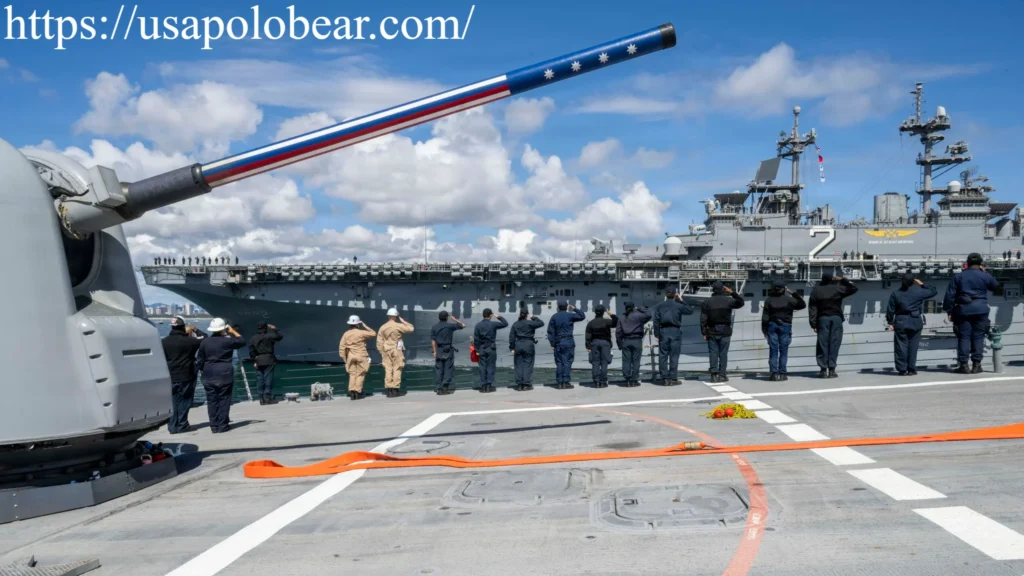
As of September 2026, the United States has 11 commissioned nuclear-powered aircraft carriers: ten Nimitz-class carriers and USS Gerald R. Ford, the first Ford-class ship. USS John F. Kennedy is approaching the fleet but remains a pre-commissioning unit.
The more important question is not simply how many carriers America owns.
It is how many can be trained, supplied, maintained, protected and deployed when needed.
The U.S. Navy’s carrier force remains a central component of American sea power and global naval presence. But maintenance delays, aging infrastructure, workforce shortages, shipbuilding capacity and the changing threat environment will all influence how effectively that force can be used.
In that sense, the future of America’s aircraft carriers will be determined as much in shipyards and training facilities as it will be on the flight deck.
Frequently Asked Questions
How many US aircraft carriers are in service in 2026?
The U.S. Navy has 11 commissioned aircraft carriers in 2026: ten Nimitz-class carriers and one Ford-class carrier, USS Gerald R. Ford (CVN-78). USS John F. Kennedy (CVN-79) is still a pre-commissioning
Where are US aircraft carriers now?
Publicly released September 2026 information places USS Abraham Lincoln and its carrier strike group in the U.S. 7th Fleet area. USS George Washington has also been operating in the Indo-Pacific, while other carriers are in different stages of deployment, training, maintenance or preparation. Exact locations can change rapidly and are not continuously published by the Navy.
How many US aircraft carriers are deployed at once?
There is no fixed number. Carriers rotate through deployment, training, maintenance and modernization cycles, so the number actually deployed at any particular time varies.
What is a carrier strike group?
A carrier strike group is a formation centered on an aircraft carrier and its carrier air wing, normally supported by surface combatants and other forces. It provides a combination of aviation, air defense, surface warfare, maritime security and power-projection capabilities.
What is OPTEMPO for US aircraft carriers?
OPTEMPO means operational tempo. For aircraft carriers, it describes the pace and frequency of operations and deployments. High OPTEMPO can increase demands on crews, aircraft, equipment, logistics and maintenance.
What is the oldest US aircraft carrier currently in service?
USS Nimitz (CVN-68), commissioned in 1975, is the oldest carrier currently in the commissioned U.S. carrier fleet. It entered its 51st year of service in 2026
What is the newest US aircraft carrier?
USS Gerald R. Ford (CVN-78) is the newest commissioned U.S. aircraft carrier. It is the lead ship of the Ford class. USS John F. Kennedy (CVN-79) is newer in construction terms but has not yet been commissioned. NNavy+1
Are US aircraft carriers becoming obsolete?
Modern anti-ship missiles, hypersonic weapons, submarines and unmanned systems create new challenges for carriers, but the Navy continues to operate and modernize the carrier fleet while integrating unmanned systems into carrier aviation. The evidence therefore points to adaptation rather than an immediate abandonment of aircraft carriers.
Why is aircraft carrier maintenance so difficult?
Aircraft carriers are exceptionally complex nuclear-powered ships. Maintenance requires specialized shipyards, dry docks, skilled workers, equipment and long-term planning. GAO has identified unplanned work and shipyard workforce and capacity problems as significant contributors to maintenance delays.
How many Ford-class aircraft carriers will the US Navy have?
The Navy’s current Ford-class plan includes USS Gerald R. Ford (CVN-78), John F. Kennedy (CVN-79), Enterprise (CVN-80), Doris Miller (CVN-81), William J. Clinton (CVN-82) and George W. Bush (CVN-83) in its published planning material.
The Navy’s published carrier information identifies these 11 ships as the current carrier force. USS John F. Kennedy (CVN-79) is separately listed as a pre-commissioning unit.
Why does the Navy have 11 carriers?
Federal law requires the Navy to maintain at least 11 operational aircraft carriers. Under 10 U.S.C. §8062, the definition of an operational carrier includes a ship temporarily unavailable for worldwide deployment because of routine or scheduled maintenance or repair.
That legal definition explains why the number of carriers in the fleet and the number immediately available for deployment are two different things.
What are the two main carrier classes?
Today’s fleet is divided between the Nimitz-class and the newer Ford-class.
The Nimitz-class forms the overwhelming majority of the fleet. These nuclear-powered carriers were designed around a roughly 50-year service life, with major mid-life refueling and complex overhauls. USS John C. Stennis, for example, is undergoing its Refueling Complex Overhaul.
USS Gerald R. Ford represents the next generation. The Ford class incorporates technologies such as electromagnetic aircraft launch systems and advanced arresting gear, alongside changes intended to improve sortie generation and reduce some lifecycle costs and manpower requirements.
Also Read
Eversource Outage CT
SoFi Stock Forecast 2026
AMD Stock Price Prediction 2030