
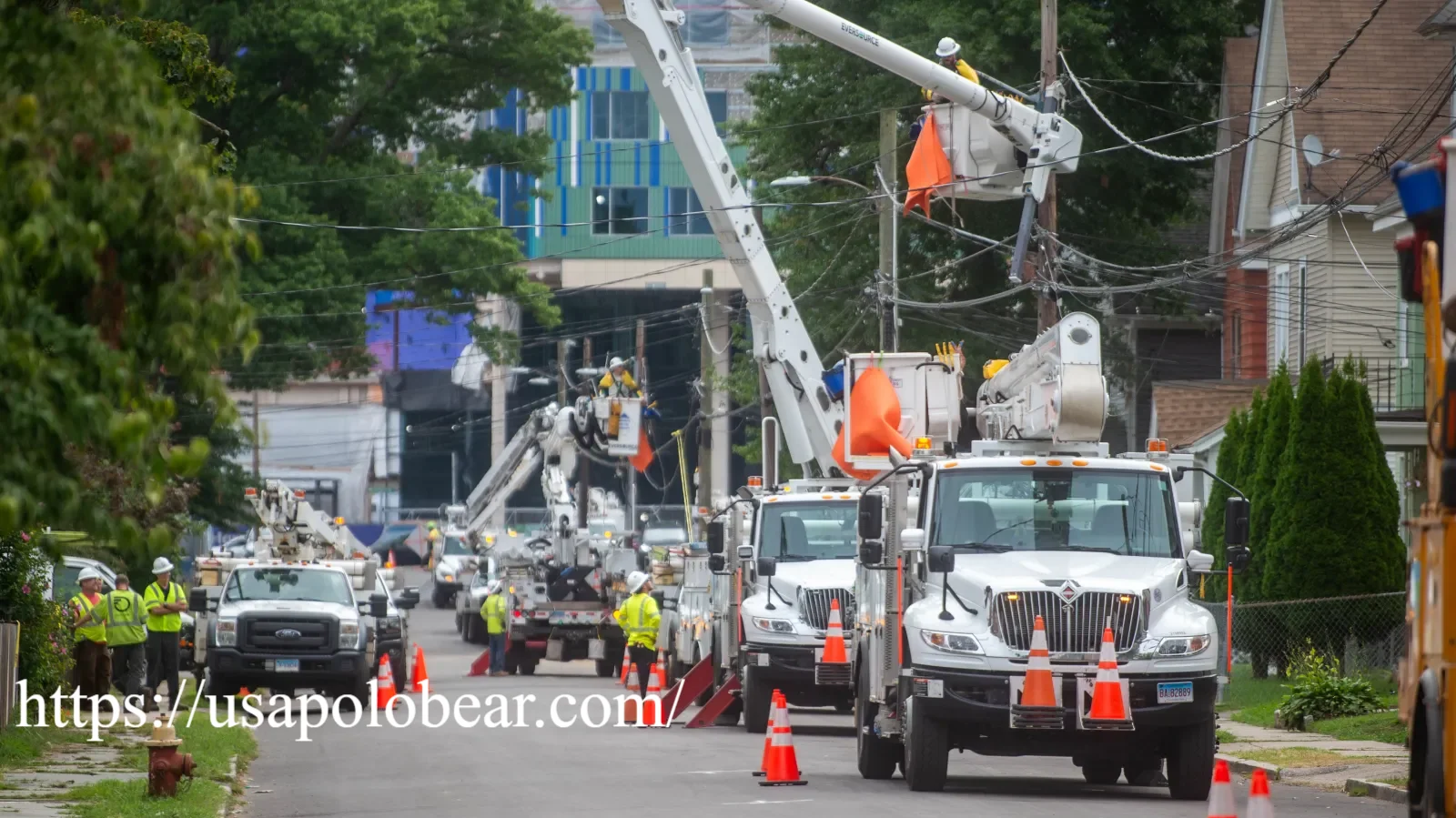
If your lights just went out, you probably want two things fast: a way to check what’s going on, and a sense of when it’ll be fixed. This guide covers both — how to use the Eversource Outage CT map, how to report an outage the right way, and what actually happens behind the scenes once you do, from crew dispatch to full restoration.
How Do I Check the Eversource Outage CT Map?
Quick answer: Go to eversource.com/outages or open the Eversource mobile app to view real-time outage data by town, including estimated restoration times where available.
The Eversource outage map shows active outages across Connecticut, Massachusetts, and New Hampshire, updated as crews assess damage and restore service. On the map, you can typically see:
- The number of customers currently without power in your town
- A general outage cause when known (tree limbs, equipment failure, vehicle accident, etc.)
- An estimated restoration time, which updates as crews get eyes on the damage
- A statewide or regional total of customers affected
Eversource Outage Map by Town (CT): Zoom into the interactive map or search your municipality directly to see town-level outage counts. During larger storms, Eversource and local news outlets often publish running lists of the hardest-hit towns as numbers shift throughout the event — as seen during a recent nor’easter, where towns including Ledyard, Wilton, Oxford, East Lyme, Old Lyme, Canterbury, New Canaan, and Stamford reported some of the highest outage counts in the state.
Keep in mind that estimated restoration times are just that — estimates. They can shift as crews complete damage assessments, especially during multi-day storm events where the scope of damage isn’t fully known until daylight and safe working conditions allow crews into the field.
sourecs: wtnh.com
How Do I Report an Eversource Outage?
Quick answer: Report an outage online at eversource.com, through the Eversource mobile app, or by calling 1-800-286-2000 (CT) — Eversource also lets you text your address to check status.
Even though Eversource’s system can automatically detect many outages, individual customer reports still matter. Here’s why:
- Confirms scope — a report from your address helps verify that an outage extends beyond a single automated signal
- Flags isolated outages — some outages affect only a handful of homes and might not trigger automatic detection right away
- Speeds up dispatch — more confirmed reports in a specific area can help prioritize where crews go first
To report an outage, you can:
- Log into your Eversource account online and select “Report an Outage”
- Use the Eversource mobile app
- Call the outage line and follow the automated prompts using your phone number on file
- Text “OUT” to Eversource if you’ve enrolled in text alerts
If you see a downed power line, treat it as live and dangerous — stay away, keep others away, and call 911 immediately rather than reporting it solely through the outage tool.
Are There Planned Eversource Outages Today?
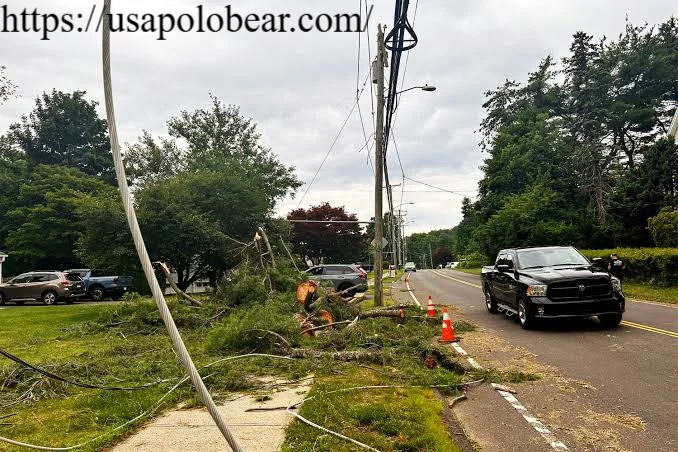
Quick answer: Planned or scheduled outages — typically for maintenance, upgrades, or equipment replacement — are listed separately from storm-related outages and are usually announced in advance through local notices or the Eversource website.
Planned outages are different from emergency restoration events. Utilities schedule them during off-peak hours when possible, and notify affected customers ahead of time through mail, email, text, or door notices, especially when work requires temporarily de-energizing a section of the grid to safely replace aging equipment like transformers or utility poles. If you’re checking whether today’s outage in your area is planned or storm-related, the outage map will typically distinguish between the two, or your notification will reference the scheduled maintenance directly.
What Causes the Most Eversource Power Outages?
Connecticut’s outage patterns are driven overwhelmingly by weather, and the state has seen a stretch of active storm activity through 2026. Some of the most common triggers include:
- High winds bringing down tree limbs onto power lines — by far the most frequent cause in Connecticut
- Nor’easters, which combine wind and heavy precipitation and can affect the entire state simultaneously
- Tropical storm remnants, which tend to hit hardest in eastern Connecticut
- Ice and heavy wet snow, which adds weight to branches and lines during winter storms
- Equipment failure, aging transformers, or vehicle accidents involving utility poles
As recently as this past weekend, a nor’easter moving through the state knocked out power to more than 10,500 Eversource customers by mid-morning, with the southeastern corner of the state — including towns like Ledyard, Old Lyme, and Canterbury — seeing some of the heaviest impacts due to tree limb damage. Eversource had positioned crews across the state ahead of the storm, a standard part of its preparation strategy for tracked weather systems.
How Does Eversource Restore Power After a Major Storm?
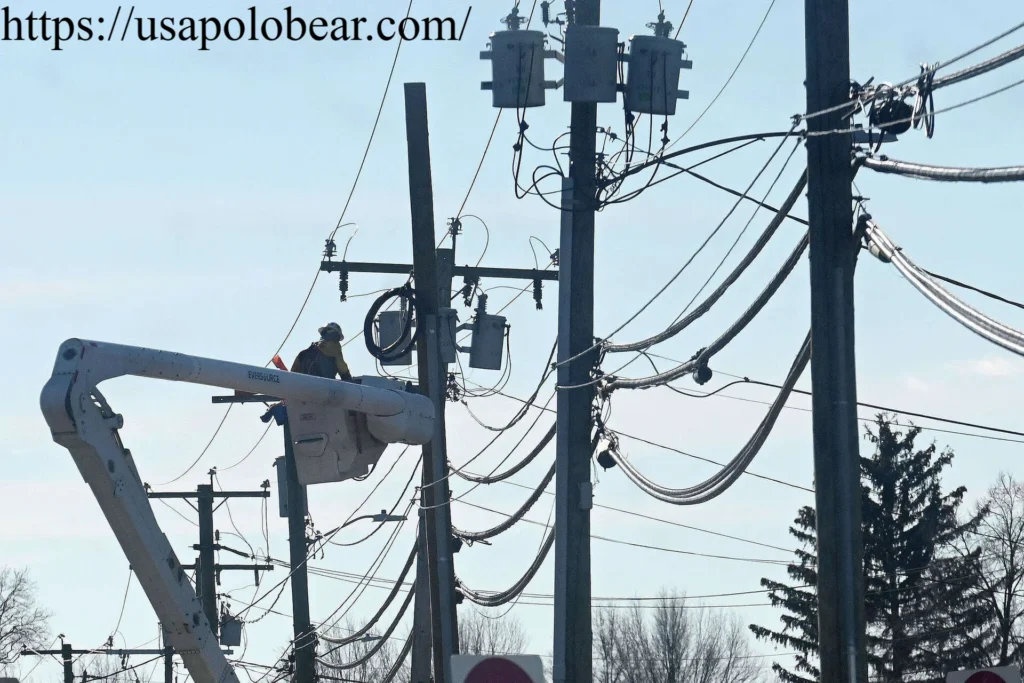
Quick answer: Eversource follows a defined restoration process that prioritizes public safety, then works from critical infrastructure down to individual homes, deploying crews from staging areas set up specifically for the storm event.
Understanding how restoration actually works can make waiting for power to come back a little less frustrating. Here’s the general order of operations utility crews follow:
| Stage | What Happens |
|---|---|
| Damage assessment | Damage assessment coordinators survey affected areas to identify downed lines, broken poles, and blocked roads |
| Public safety response | Crews first clear immediate hazards — downed lines, blocked emergency routes, and dangerous debris |
| Critical infrastructure | Power is restored to hospitals, police and fire stations, water treatment plants, and other essential services |
| Largest-impact repairs | Crews address damage affecting the most customers at once, such as substation or major circuit repairs |
| Neighborhood and individual repairs | Remaining localized outages, including single-home service line issues, are addressed last |
During larger events, Eversource activates mobile command centers and staging areas — often positioned strategically in both eastern and western parts of the state — where crews, equipment, and replacement utility poles and transformers are staged before deployment. Incident commanders coordinate crew assignments, track restoration progress in real time, and adjust resources as new damage is identified.
For major storms, Eversource also brings in mutual aid contractor crews from other states and regions to supplement its own lineworkers, particularly when a storm’s scope stretches resources thin across multiple service territories in Connecticut, Massachusetts, and New Hampshire simultaneously.
What Slows Down Restoration Efforts?
A few conditions consistently extend restoration timelines, even with a strong crew response:
- High sustained winds — crews generally can’t safely operate bucket trucks at height until wind speeds drop to safer levels
- Blocked roads — downed trees have to be cleared before crews can even reach damaged lines
- Widespread, simultaneous damage — a storm affecting the whole state at once stretches available crews thinner than a localized outage
- Nighttime and low-visibility conditions — some repair work is safer and faster in daylight
This is part of why utilities sometimes give a restoration window of “two to six days” for the most severe storms rather than a same-day estimate — it reflects the honest complexity of coordinating hundreds of crews across hundreds of individual damage sites rather than a single repair.
What Should I Do While Waiting for Power to Be Restored?
- Keep refrigerator and freezer doors closed as much as possible to preserve food
- Use flashlights rather than candles to reduce fire risk
- Unplug sensitive electronics to protect them from potential power surges when service resumes
- Never run a generator indoors, in a garage, or near windows — the carbon monoxide risk is serious
- Check the outage map periodically rather than repeatedly calling, since the map reflects the same real-time data customer service reps see
Custom FAQ Section
How do I check the Eversource outage map and see restoration times?
Visit eversource.com/outages or use the Eversource mobile app to view the interactive outage map, which shows active outages, likely causes, and estimated restoration times by town. Estimated times can change as crews complete on-site damage assessments.
Where can I find the Eversource outage map by town in Connecticut?
The Eversource outage map lets you search or zoom into specific Connecticut towns to see current outage counts. During major storms, local news outlets also publish town-by-town outage breakdowns as numbers change throughout the event.
How do I report an outage to Eversource?
You can report an outage online through your Eversource account, via the Eversource mobile app, or by calling the outage line at 1-800-286-2000 for Connecticut customers. If you see a downed power line, call 911 instead of reporting it through the outage tool.
Are there planned Eversource outages today?
Planned outages, usually scheduled for equipment maintenance or upgrades, are announced in advance to affected customers and are listed separately from emergency storm outages on the outage map or through direct notification.
Where can I see a list of current Eversource power outages in CT today?
The Eversource outage map provides a real-time, statewide list of current outages broken down by town. During active storms, Connecticut news stations also publish frequently updated outage totals for the hardest-hit communities.
FAQ Schema (JSON-LD)
Important Entities Mentioned
Eversource, Eversource Energy, Connecticut, United Illuminating, Ledyard, Wilton, Oxford, East Lyme, Old Lyme, Canterbury, New Canaan, Stamford, Hartford, New London, Newtown, Massachusetts, New Hampshire, Governor Ned Lamont.
Suggested Featured Image Idea
A wide shot of an Eversource bucket truck and line crew working on a damaged utility pole at dusk, with storm clouds and downed tree limbs visible in the background — conveying both the urgency of storm response and the hands-on restoration process customers are waiting on.
AlsoRecl