You Deserve the Real Thing
If you have been searching for the perfect Polo Bear Sweater, you already know how iconic this piece is. The Ralph Lauren Polo Bear is not just a sweater. It is a statement. It has been worn by style icons, resold for hundreds of dollars, and copied by counterfeiters who want a piece of that magic without doing the work.
The problem? Fakes are getting better every single year. Some look so convincing that even experienced buyers get tricked. Knowing how to spot an authentic Polo Bear Sweater is not a luxury skill anymore. It is a necessity if you shop on resale platforms, vintage markets, or any third-party store.
In this guide, I will walk you through every detail that separates a genuine authentic Polo Bear Sweater from a cheap knockoff. We will cover stitching, tags, bear embroidery, knit texture, and much more. By the time you finish reading, you will know exactly what to look for before you spend a single dollar.
“The difference between real and fake often lives in the smallest details — a crooked stitch, a faded label, a bear that just looks slightly wrong.”
Why the Polo Bear Sweater Is So Frequently Faked
The Ralph Lauren Polo Bear collection launched in the early 1990s. It became a cultural icon almost immediately. Hip-hop artists embraced it. Skaters wore it. And today, streetwear enthusiasts treat vintage pieces like collector’s items.
Because demand is so high and supply is limited, fakes flood the market constantly. Some counterfeit versions sell for as little as twenty dollars. Others sell for over one hundred, packaged to look almost identical to the real thing. That is exactly why learning how to spot an authentic Polo Bear Sweater matters so much before you buy.
The resale value of a genuine authentic Polo Bear Sweater ranges from one hundred fifty to over five hundred dollars depending on condition, colorway, and year. That kind of money deserves careful attention.
Quick Context: What Makes This Sweater Special?
- Introduced in the early 1990s by Ralph Lauren
- Features a hand-stitched bear character in various outfits
- Each design tells a story: skier bear, golfer bear, graduation bear, and more
- Considered a grail piece in vintage and streetwear communities
- Regularly appears on resale platforms like Grailed, Depop, and eBay
How to Spot an Authentic Polo Bear Sweater: Start With the Tags
Tags are the first thing you should examine when you are trying to spot an authentic Polo Bear Sweater. Ralph Lauren used specific labeling conventions that fakes rarely get exactly right.
The Country of Origin Tag
Authentic vintage Polo Bear Sweaters were predominantly made in the USA, Hong Kong, or China, depending on the era. The font on the country of origin tag should be clean, consistent, and properly sewn. If the text looks blurry, printed off-center, or uses a font that feels slightly wrong, that is your first red flag.
On a real sweater, the care label and origin tag are tightly and neatly stitched into the inner collar. The stitching itself should feel firm and lie flat. Loose threads, uneven edges, or labels that feel like they are about to fall off are signs of a fake.
The Main Polo Ralph Lauren Label
Look at the main neck label carefully. On an authentic Polo Bear Sweater, the Polo Ralph Lauren name is embroidered directly into the label with consistent letter spacing. The thread color should be a rich, deep tone, not dull or washed out.
Fake labels often use iron-on or printed text instead of embroidery. Run your fingernail across the label. If it feels flat and smooth like a sticker, it is almost certainly not genuine. Real embroidery has texture you can feel.
Also check the size tag. On authentic pieces, size markings are clean and bold. They align perfectly with the center of the label. Any deviation in alignment is worth questioning.
🚩 Red Flags in the Tags
- Blurry or inconsistent fonts anywhere on any label
- Labels that feel stiff, plastic, or printed rather than woven
- Loose or uneven stitching around label edges
- Wrong country of origin for the era (do your research)
- Size tag alignment that is off-center or crooked
Examine the Polo Bear Embroidery Up Close
The bear is the heart of this sweater. It is also the hardest part for counterfeiters to replicate correctly. When you want to know how to spot an authentic Polo Bear Sweater, the bear embroidery tells you almost everything.
Bear Proportions and Posture
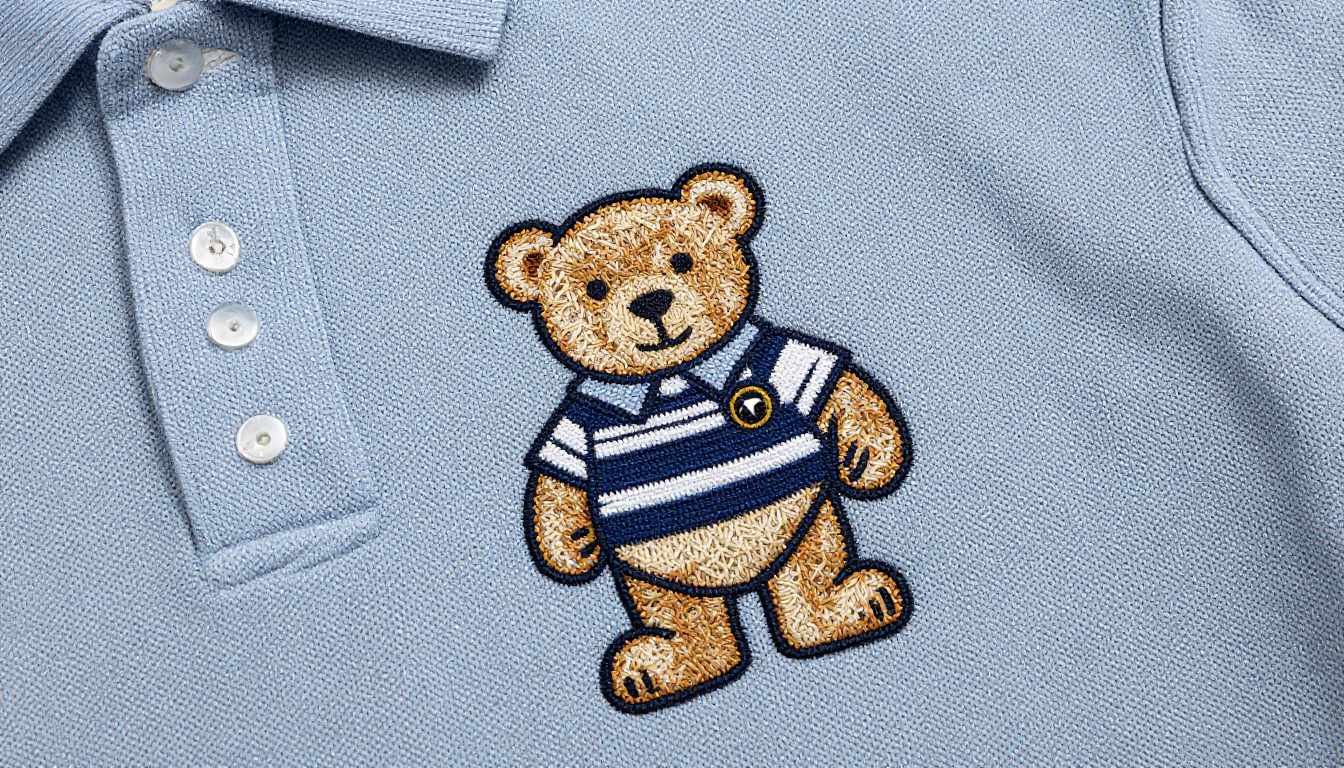
On a genuine authentic Polo Bear Sweater, the bear has very specific proportions. The face is round with well-defined features. The limbs are proportionate and clearly articulated. Each outfit detail, whether it is a tiny scarf, a golf club, or graduation cap, is rendered with precision.
On fakes, bears often look slightly off. The head might be too large or too small. The expression can look vague or wrong. Details in the clothing get lost because the stitching is too coarse to capture them properly.
Thread Count and Stitch Density
This is where quality truly shows. An authentic Polo Bear Sweater uses a high stitch count for the bear embroidery. That means the bear looks smooth, detailed, and almost three-dimensional from certain angles.
A counterfeit bear looks flat and rough. The colors bleed into each other. Fine details like the bear’s face or fingers look muddy instead of crisp. I always recommend using a magnifying glass or zooming in with your phone camera when examining the bear up close. The difference becomes obvious instantly.
Color Accuracy and Vibrancy
Colors on authentic pieces are vibrant and intentional. Ralph Lauren chose specific color palettes for each bear variant. If the colors look slightly muted, mismatched, or inconsistent with known authentic examples, be cautious. Compare the piece against verified authentic listings before buying.
The Knit Itself: Fabric Quality Reveals Everything
Beyond the bear, the knit quality of the sweater body is a powerful authenticity indicator. Knowing how to spot an authentic Polo Bear Sweater means understanding what real knit quality feels like.
Weight and Texture
Genuine Polo Bear Sweaters have a satisfying weight to them. The knit is dense and structured. When you hold it, it does not feel flimsy or thin. It drapes well and holds its shape even after years of wear.
Fake versions typically use cheaper yarn blends that feel lightweight and loose. The knit structure looks uneven under close inspection. You might notice gaps between stitches or inconsistencies in the knit pattern that run across the body of the sweater.
Fiber Composition
Authentic vintage versions are typically made from high-quality cotton or wool blends. The fiber content label should reflect this. If the label says a high percentage of acrylic with no natural fibers, be skeptical. That fiber blend is common in cheap reproductions but rarely found in genuine Polo pieces from the classic era.
Quick Tip: The Stretch Test
- Gently stretch a small section of the knit fabric
- A real sweater bounces back quickly with good memory
- A fake often stretches and stays stretched, showing poor elasticity
- Never pull hard enough to damage the piece during this test
How to Spot an Authentic Polo Bear Sweater by Its Stitching Details
Stitching runs throughout a genuine Polo Bear Sweater in ways that counterfeiters consistently get wrong. Learning to read stitching quality is one of the most reliable skills you can develop.
Seam Consistency
Run your fingers along the side seams of the sweater. On a real piece, seams are tight, even, and consistent from shoulder to hem. There are no gaps, puckers, or places where the seam looks rushed.
On fakes, seams often look hurried. You might find uneven tension, misaligned rib patterns at the hem, or visible gaps in the stitching. The cuffs and collar ribbing should align perfectly with the body of the sweater. If they do not, the authenticity is questionable.
Collar and Cuff Ribbing
The collar ribbing on an authentic Polo Bear Sweater has a specific tightness and elasticity. It hugs the neck without being uncomfortably tight. The rib pattern is clean and even, row after row.
Fake collars often look wider than they should or lose their structure after minimal wear. The rib stitches may be visible at uneven intervals, which is a clear sign of inferior construction.
Price and Seller Credibility: Do Not Skip This Step
Knowing how to spot an authentic Polo Bear Sweater also means knowing how to evaluate who is selling it to you. No matter how good your eye is, seller credibility matters.
Resale Platform Signals
On platforms like Grailed, Depop, and eBay, always check seller feedback first. A seller with hundreds of positive reviews and a history of selling verified Ralph Lauren pieces is significantly more trustworthy than a new account with no track record.
Ask for multiple photos before buying. Request close-up shots of the tag, the bear embroidery, the care label, and the seams. Any seller with a genuine authentic Polo Bear Sweater should have no hesitation providing these. Reluctance to share detailed photos is a warning sign.
Price as an Authenticity Clue
If someone is selling what they claim is an authentic Polo Bear Sweater for thirty dollars, step back and ask yourself why. Genuine vintage pieces in good condition do not sell that cheap unless something is wrong. Either the piece is fake, or there is significant undisclosed damage.
On the other hand, do not assume a high price guarantees authenticity either. Some sellers overprice fakes intentionally to create a false sense of legitimacy. Price is one signal among many, not the only thing you should look at.
“A good deal that feels too good to be true almost always is. Trust your research more than the price tag.”
Comparing New Retail Authentic Polo Bear Sweaters vs Vintage
Ralph Lauren has released modern iterations of the Polo Bear Sweater over the years. The authentication process differs slightly depending on whether you are buying new retail or vintage.
New Retail Pieces
If you buy directly from RalphLauren.com or an authorized department store, authenticity is not in question. The main risk comes when buying from third-party resellers claiming to sell unused retail stock. In these cases, check for original hang tags, which should still be attached and use the correct Polo Ralph Lauren branding with a proper security barcode.
Vintage Pieces From the 1990s
This is where the most fakes circulate. For vintage authentic Polo Bear Sweater pieces, cross-reference the label format with known databases of vintage Ralph Lauren tags. Communities on Reddit, such as r/VintageFashion and r/ralph_lauren, maintain detailed guides on label evolution across decades. These are free resources that can save you from expensive mistakes.
- Check the label format against era-specific vintage Polo guides
- Verify the country of origin matches the production era
- Look for correct font style and weight on all labels
- Confirm the bear design matches documented authentic variants
- Inspect overall condition for age-appropriate wear patterns
How to Spot an Authentic Polo Bear Sweater on Resale Apps
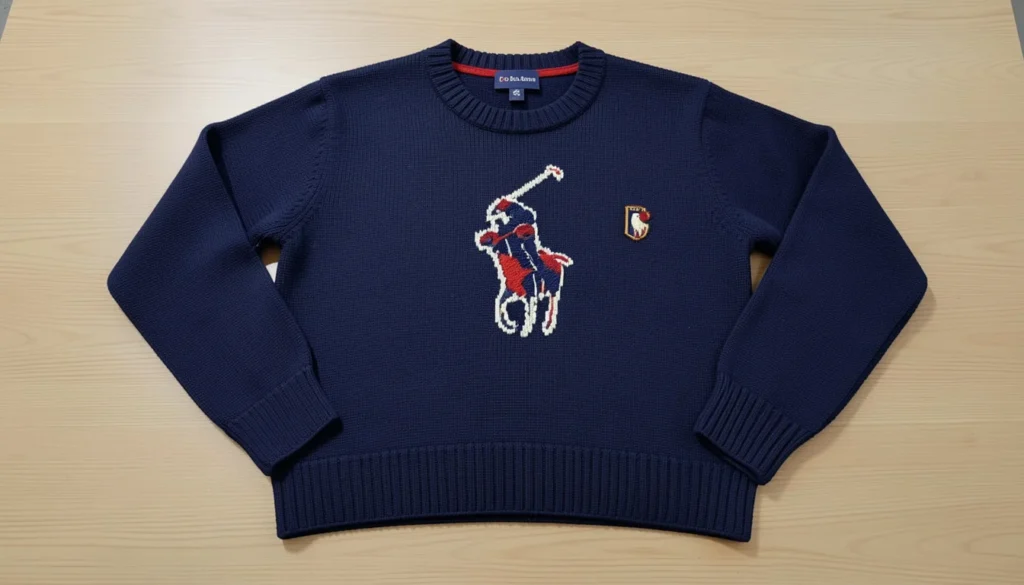
Shopping on resale apps has become the most common way people buy vintage streetwear. But it also carries the highest risk of encountering fakes. Here is a practical approach to spotting an authentic Polo Bear Sweater when you shop online.
- Request a video walkthrough. Ask the seller to send a short video showing the entire sweater, including all tags. Movement reveals texture and quality in ways still photos cannot.
- Ask for natural light photos. Colors look different under artificial lighting. Natural daylight reveals accurate color matching and any fading that might indicate age or washing issues.
- Check measurement photos. Authentic Polo Bear Sweaters follow consistent sizing conventions. If the listed size does not match the measurements provided, something is off.
- Use reverse image search. Take the product photos and run them through Google Images. If the same photos appear on other listings or stock image sites, the seller may not even have the item.
- Ask for authentication documentation. Platforms like Depop now offer authentication services. A seller who has gone through that process is signaling good faith.
Common Mistakes Buyers Make When Authenticating
Even careful buyers make mistakes when trying to spot an authentic Polo Bear Sweater. Here are the most common ones and how to avoid them.
Focusing Only on the Bear
The bear is important. But skilled counterfeiters know that buyers look at the bear first. So they often invest more effort there while cutting corners on labels and seams. Always examine the whole sweater, not just the embroidery.
Trusting Stock Photos
Listings that use only stock photos or catalog images rather than actual product photos are a red flag. You cannot assess an authentic Polo Bear Sweater from stock imagery. Always insist on original photos of the specific item you are buying.
Skipping the Label Details
Labels seem boring compared to the bear design. But they contain some of the most reliable authenticity information available. Never skip label inspection when you are trying to spot an authentic Polo Bear Sweater.
🚩 Most Common Buyer Mistakes
- Evaluating only the bear and ignoring labels and seams
- Accepting stock photos instead of real item photos
- Assuming high price means guaranteed authenticity
- Not comparing against verified authentic examples before buying
- Skipping seller feedback and credibility checks
Use Authentication Communities and Resources
You do not have to figure this out alone. Online communities dedicated to vintage Ralph Lauren and streetwear authentication exist specifically to help buyers spot an authentic Polo Bear Sweater with confidence.
Reddit communities like r/ralph_lauren and r/FashionReps offer authentication threads where experienced members review photos and give detailed feedback. Facebook groups dedicated to vintage Polo Ralph Lauren also exist and often contain years of archived posts showing documented authentic versus fake comparisons.
YouTube channels focused on streetwear authentication regularly publish video guides on how to spot an authentic Polo Bear Sweater. Watching someone walk through a real authentication in real time teaches you details that are hard to absorb from written guides alone.
The Bottom Line: Trust Your Eyes and Your Research
Knowing how to spot an authentic Polo Bear Sweater is a skill that pays for itself the first time you avoid a bad purchase. The details are there when you know what to look for. Tags, bear embroidery quality, knit texture, seam construction, and seller credibility all work together to tell you whether a piece is real.
I want you to walk away from this guide feeling confident enough to examine any Polo Bear Sweater and make an informed decision. The authentic Polo Bear Sweater is worth every dollar of its true price. It is a piece of fashion history, and you deserve to own the real version.
Take your time. Ask questions. Request more photos. Use the communities that exist to help you. And when something feels off about an authentic Polo Bear Sweater listing, trust that instinct.
Have you spotted a fake Polo Bear Sweater before? Share your experience in the comments below. Your story could help someone else avoid the same mistake.
Frequently Asked Questions
Q1. How do I know if my Polo Bear Sweater is authentic?
Check the labels for correct font, stitching quality, and country of origin. Examine the bear embroidery closely for fine detail and crisp stitching. Compare against verified authentic examples from trusted online communities. A genuine authentic Polo Bear Sweater will pass all these checks.
Q2. What year did the Polo Bear Sweater first come out?
The Polo Bear collection was introduced by Ralph Lauren in the early 1990s. The bear character quickly became iconic across knitwear, rugby shirts, and other garments, with the sweater becoming one of the most sought-after pieces.
Q3. Where is the best place to buy an authentic Polo Bear Sweater?
RalphLauren.com and authorized department stores are the safest options for new pieces. For vintage, platforms like Grailed and Depop with authentication services offer safer buying. Always verify seller credibility and request detailed photos before purchasing.
Q4. How much does an authentic Polo Bear Sweater cost?
Vintage authentic pieces in good condition typically sell between one hundred fifty and five hundred dollars depending on the design and condition. New retail versions vary by season and style. Be cautious of pricing that is unusually low, as it often signals a fake.
Q5. Can I get my Polo Bear Sweater professionally authenticated?
Yes. Services like Legit Check App and some resale platforms offer professional authentication. Vintage fashion consultants who specialize in Ralph Lauren can also provide in-person verification for valuable pieces.
Q6. What are the most common types of Polo Bear Sweater designs?
The most collectible designs include the ski bear, golf bear, graduation bear, and the classic stadium bear. Each version features the bear in a specific outfit. Authentic pieces have detailed, well-defined outfit embroidery on the bear character.
Q7. How do fake Polo Bear Sweater labels usually differ from real ones?
Fake labels often use printed or iron-on text instead of embroidery, show inconsistent font weights, feature off-center alignment, or use slightly wrong color tones. Real labels are woven with clean, consistent embroidery that you can feel when you run your finger across the surface.
Q8. Is the Polo Bear Sweater still being made today?
Yes. Ralph Lauren continues to release Polo Bear pieces periodically through seasonal collections and special releases. Modern versions maintain the iconic bear character but may differ in construction details from vintage examples.
Q9. What fiber content should an authentic Polo Bear Sweater have?
Authentic vintage pieces are typically made from high-quality cotton or wool blends. A very high percentage of acrylic fiber with no natural content is a sign of a cheap counterfeit. Always check the fiber content label as part of your authentication process.
Q10. Are there online communities where I can get help authenticating?
Yes. Reddit communities including r/ralph_lauren and r/VintageFashion regularly help members authenticate pieces. Facebook groups dedicated to vintage Polo Ralph Lauren are also active and knowledgeable. Post clear photos of tags, seams, and the bear for the best feedback.
Read More………
About The Author
James Whitfield is a fashion editor and vintage clothing specialist with over a decade of experience in streetwear authentication. He has authenticated thousands of vintage Ralph Lauren pieces and regularly contributes to major style publications. James is passionate about helping buyers make confident, informed purchasing decisions in the resale market.